




Introduction
In today’s rapidly evolving digital landscape, robust security measures are essential, particularly in the financial sector where SMC operates. As a diversified financial services company, SMC spans multiple segments including Broking, Insurance, Wealth Management, and Distribution. We are committed to delivering innovative solutions that support these diverse business verticals. Our applications are continuously developed and enhanced to not only scale our operations but also address the unique challenges of our industry.
Recognising the critical need to strengthen our development process, we have implemented a comprehensive in-house DevSecOps solution. This article details our journey of integrating security throughout the Software Development Lifecycle (SDLC) using a “Shift Left” approach. By leveraging AWS native services and open-source security tools, we have created a robust security solution that protects our applications from their inception. This proactive approach to security helps us safeguard against potential threats while ensuring regulatory compliance and maintaining the trust of our valued customers.
The Security Landscape: Common Challenges and Risks.
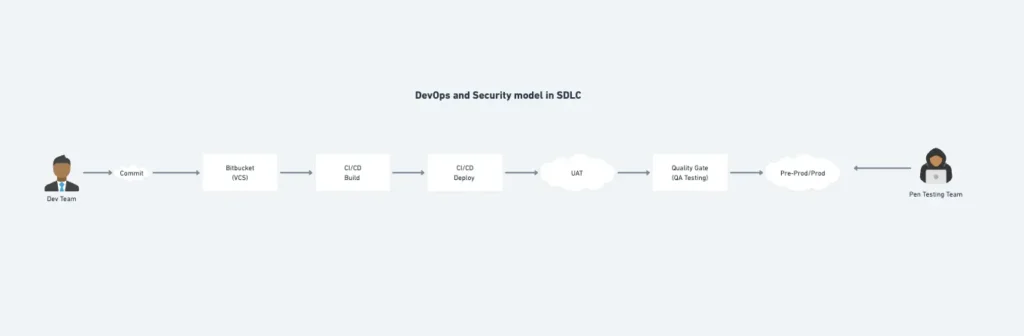
Organizations often encounter several critical challenges when operating without a robust DevSecOps framework:
- Late-stage security testing: Security checks were often an afterthought, leading to costly fixes and delayed releases.
- Incomplete security coverage: Critical areas like infrastructure, containers, and dependencies were frequently overlooked.
- Slow feedback loops: The gap between security findings and developer fixes resulted in prolonged vulnerability windows.
- Limited testing for new features: Insufficient security testing for new features introduced vulnerabilities into production environments.
- Manual testing processes: Time-consuming, error-prone manual security testing hindered ability to scale and maintain a consistent security posture.
Organizations without proper security integration face several potential risks:
- Vulnerable Dependencies: Risks from using libraries with known vulnerabilities.
- Code Exploits: Applications can be vulnerable due to insufficient security assessments during the development process.
- Insecure Container Images: Containers may be deployed with unaddressed vulnerabilities.
- Credential Leaks: Accidental exposure of sensitive information like passwords and API keys.
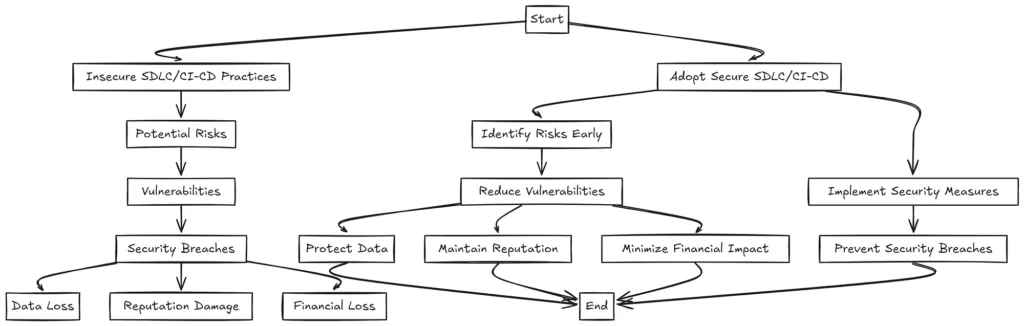
Embracing DevSecOps: A Paradigm Shift
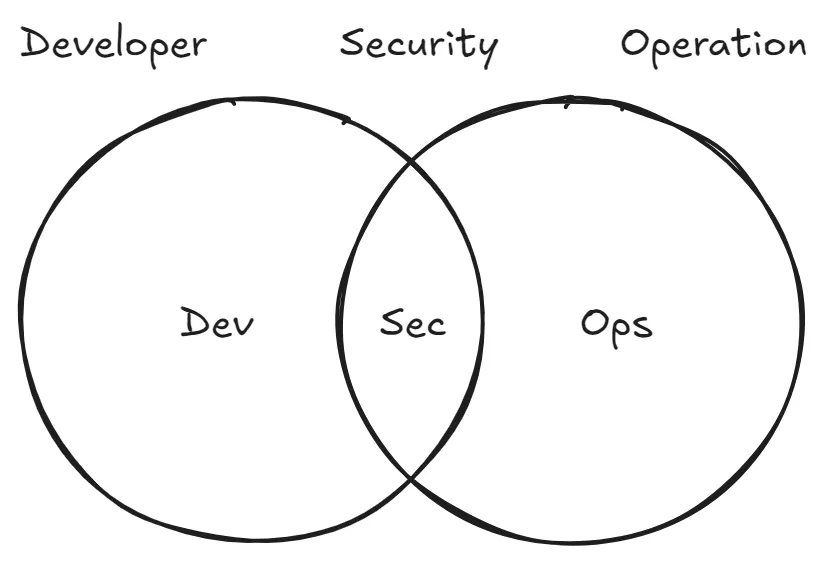
DevSecOps is a comprehensive approach that seamlessly integrates security into the entire software development lifecycle (SDLC). This methodology ensures that security is not an afterthought but a fundamental consideration at every stage of development. At its core, DevSecOps embraces the principle of “Shift Left Security,” which advocates for integrating security testing and considerations as early as possible in the development process. By shifting security left, potential vulnerabilities can be identified and addressed early on, significantly reducing the risk and cost associated with late-stage security fixes. DevSecOps practices include code analysis, vulnerability scanning, and continuous security monitoring, all integrated into the CI/CD pipeline. This approach fosters a culture of shared responsibility for security among development, operations, and security teams, leading to more robust, secure, and compliant software products. Ultimately, DevSecOps and Shift Left Security work in tandem to create a more efficient, secure, and agile development process that can keep pace with today’s rapidly evolving threat landscape.
Why DevSecOps and Its Benefits ?
- Proactive security: Identify and address vulnerabilities early in the development lifecycle, preventing them from reaching production.
- Accelerated development: Automated security checks streamline the development process, reducing delays and enabling faster releases.
- Cost-effective security: Catching and fixing vulnerabilities early saves time and resources compared to costly remediation efforts later in the process.
- Improved collaboration: DevSecOps fosters a culture of shared responsibility for security, breaking down silos between development and security teams.
- Enhanced compliance: Automated security checks help organizations meet regulatory requirements and industry standards more efficiently.
- Strengthened security posture: DevSecOps ensures that security is a continuous process, continuously improving the application’s resilience against threats.